Why My Recovery Stalled—And What Fixed It
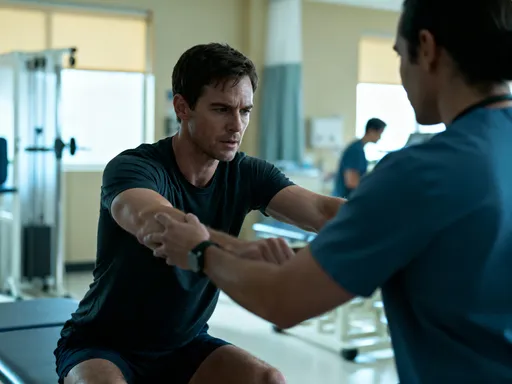
Rehabilitation through Western medicine gave me hope, but progress felt slow. I followed orders, yet something was missing. Turns out, common exercise missteps were holding me back. This is about the hidden pitfalls no one warned me about—simple mistakes that can quietly sabotage recovery. If you're healing and not seeing results, you're not alone. Let’s explore what really helps, what doesn’t, and how to move forward the right way—safely and effectively.
The Promise and Reality of Western Medical Rehab
Western medical rehabilitation is built on a foundation of science, structure, and clinical expertise. When injury strikes—whether it’s a torn ligament, chronic back pain, or post-surgical recovery—patients are typically guided through a standardized protocol. These plans often include physical therapy sessions, prescribed exercises, and periodic assessments by licensed professionals. The process is logical, methodical, and grounded in decades of research. For many, this approach brings measurable improvement and a clear path back to normal function. Yet, despite its strengths, the system isn’t flawless. Many individuals, like myself, have experienced a frustrating plateau: doing everything “by the book” yet seeing little to no progress after weeks or even months.
The gap between expectation and experience often lies in the assumption that medical authority guarantees results. There’s a quiet belief that if a doctor prescribes an exercise or a therapist demonstrates a stretch, following it precisely will lead to healing. While trust in healthcare providers is essential, recovery is not a passive transaction. Healing doesn’t occur solely because a treatment is administered; it happens when the body adapts, rebuilds, and relearns movement through active participation. The human body is not a machine with replaceable parts—it’s a dynamic, responsive system that requires engagement, not just intervention.
One of the most overlooked aspects of rehabilitation is patient agency. Too often, individuals adopt the role of a passive recipient rather than an active participant. They complete their assigned exercises at home but don’t question whether the movements feel right, whether pain patterns are changing, or whether progress is truly being made. This lack of self-awareness can lead to mechanical repetition without meaningful adaptation. The truth is, no two bodies respond identically to injury or treatment. A one-size-fits-all approach may initiate healing, but it often fails to carry someone across the finish line. Recognizing this disconnect was the first step in understanding why my recovery had stalled—and what needed to change.
Pitfall #1: Over-Reliance on Passive Treatments
One of the most common yet underdiscussed obstacles in rehabilitation is the overuse of passive treatments. These are therapies administered to the patient rather than performed by them—examples include ultrasound, electrical stimulation, heat or cold therapy, and manual manipulation by a physical therapist. While these modalities can provide temporary relief from pain and inflammation, they do not, on their own, restore function. They are tools, not solutions. The danger arises when patients—often unintentionally—come to rely on these treatments as the primary driver of recovery, believing that each session is actively rebuilding strength or repairing tissue.
The reality is that passive treatments do not activate the neuromuscular system in the way that deliberate, conscious movement does. Muscles atrophy not just from disuse but from a lack of neural signaling. After an injury, the brain often “shuts down” certain movement pathways as a protective mechanism. To reverse this, the nervous system must be retrained through active, purposeful exercise. This process, known as neuroplasticity, allows the brain to reestablish control over weakened or inhibited muscles. Passive therapies may reduce discomfort, but they do not trigger this re-education. Without it, the body remains in a state of partial disconnection, where strength and coordination fail to return even if pain diminishes.
A real-world example of this pitfall is the individual who attends weekly therapy sessions, receives ultrasound and massage, and feels better afterward—but avoids doing their home exercises consistently. They may report feeling “looser” or “more relaxed,” yet when asked to perform a simple functional task like climbing stairs or standing from a chair, they still struggle. The temporary benefits of passive care create a false sense of progress, delaying the crucial shift toward active rehabilitation. In my own experience, I found myself scheduling more therapy appointments while doing fewer exercises at home, mistaking professional treatment for personal effort. Only when I reduced dependence on passive modalities and prioritized daily movement did I begin to see real change.
Pitfall #2: Misguided Exercise Intensity
Another major factor that can derail recovery is exercising at the wrong intensity. This manifests in two extremes: pushing too hard too soon, or doing too little out of fear. The “no pain, no gain” mindset, often carried over from fitness culture, can be particularly dangerous during rehabilitation. Individuals may interpret soreness or discomfort as a sign of progress, leading them to repeat movements that irritate healing tissues. On the other hand, the belief that any pain is harmful can result in excessive rest, avoidance of movement, and prolonged deconditioning. Both approaches disrupt the delicate balance required for optimal healing.
The body heals in phases—initially through inflammation, then repair, and finally remodeling. Each stage has different demands. In the early phase, excessive strain can delay healing by causing micro-damage to fragile tissues. Later, insufficient challenge prevents the strengthening needed for functional recovery. The key is to work within the therapeutic window: a range of activity that is neither so intense that it causes harm nor so minimal that it fails to stimulate adaptation. This concept is supported by research in exercise physiology, which shows that tissue remodeling occurs in response to controlled mechanical stress.
So how does one find this window? The answer lies in listening to the body’s feedback. Pain during or immediately after exercise is a warning sign, but the absence of pain does not always mean safety. Delayed soreness, swelling, or changes in movement quality are equally important indicators. A more reliable guide than pain is perceived exertion—how hard an activity feels on a scale from 1 to 10. In early recovery, exercises should generally stay between a 3 and 5, allowing for effort without strain. Movement quality should take precedence over quantity. Performing five controlled, pain-free squats with proper form is far more beneficial than ten sloppy repetitions that compromise alignment.
Pitfall #3: Ignoring Movement Patterns
Many rehabilitation programs focus heavily on isolated strength or flexibility—building up a weak muscle or stretching a tight joint. While these elements are important, they often overshadow a more fundamental issue: movement patterns. The body doesn’t function as a collection of individual parts; it moves as an integrated system. If coordination, balance, and neuromuscular control are neglected, even strong muscles can fail to produce efficient, pain-free motion. This is why someone might complete months of knee strengthening exercises yet still walk with a limp or avoid squatting—because the brain hasn’t relearned how to use the joint correctly in real-life contexts.
Neuromuscular habits formed during injury can persist long after tissues have healed. For example, favoring one leg due to past pain can lead to asymmetrical movement patterns that strain other areas, such as the hips or lower back. These compensations become automatic, often going unnoticed until they cause secondary issues. Addressing them requires more than repetition; it requires awareness. This is where form becomes more important than load. Lifting a heavier weight with poor mechanics reinforces bad habits, while moving slowly and deliberately with attention to alignment helps rewire the nervous system.
Simple self-checks can make a significant difference. Using a mirror to observe posture during exercises allows for real-time feedback. Recording movement with a smartphone camera can reveal subtle imbalances—such as uneven weight distribution or torso shifting—that are hard to feel. Practicing movements in slow motion enhances mind-muscle connection, giving the brain time to process and correct errors. In my own recovery, I began filming my walking pattern and noticed that I was still subtly limping, even though I felt “normal.” This awareness led me to incorporate gait retraining exercises, which ultimately improved my balance and reduced strain on my lower back.
Pitfall #4: One-Size-Fits-All Exercise Plans
Standardized rehabilitation protocols are efficient—they allow therapists to manage multiple patients with similar diagnoses using proven methods. However, efficiency should not come at the cost of individualization. A program designed for an athlete recovering from an ACL tear may not suit a middle-aged parent healing from the same injury, especially if their daily activities, fitness levels, and long-term goals differ. Yet, many patients are given identical exercise sheets with little modification, leading to frustration when progress stalls or discomfort persists.
Personalization is critical because recovery is influenced by numerous factors beyond the injury itself. Body type, age, prior activity level, occupation, and even psychological factors like fear of re-injury all play a role. A sedentary office worker with chronic lower back pain has different needs than a gardener with the same diagnosis. One may benefit from core stabilization and posture correction, while the other needs lifting mechanics and hip mobility training. When exercises don’t align with real-life demands, adherence drops, and functional improvement lags.
Signs that a rehab plan isn’t working include persistent fatigue, recurring discomfort in new areas, and lack of progress despite consistency. These are not reasons to abandon therapy but cues to reassess and adapt. A good physical therapist will welcome questions and be willing to modify exercises based on feedback. Collaboration is key—patients should feel empowered to say, “This doesn’t feel right,” or “I need something that helps me with bending and lifting.” In my case, switching from generic leg lifts to functional movements like step-ups and controlled lunges made a dramatic difference because they mirrored the activities I actually did at home.
Building a Smarter Exercise Strategy
Effective rehabilitation doesn’t require rejecting medical advice—it requires integrating it with intelligent self-awareness. The goal is not to become your own therapist but to become an informed, active participant in your healing. This means respecting professional guidance while also tuning into your body’s signals and adjusting accordingly. A smarter exercise strategy is built on three core principles: progression over perfection, consistency over intensity, and feedback over assumption.
Progression means gradually increasing challenge in a way that respects healing timelines. It’s not about achieving flawless form on day one but about making small, sustainable improvements over time. Consistency is more valuable than occasional high-effort sessions. Ten minutes of daily movement with focus and control yields better results than one hour of intense exercise once a week. Feedback—whether from pain levels, movement quality, or daily function—should guide decisions more than rigid schedules or arbitrary rep counts.
Tools like movement journals and pain logs can help track patterns and identify triggers. Recording how an exercise feels, when discomfort occurs, and how daily activities are affected provides valuable data. Weekly check-ins with small, measurable goals—such as walking for 15 minutes without stiffness or performing a squat with full range of motion—create a sense of direction and accomplishment. Equally important are the silent partners in recovery: rest, sleep, and nutrition. Tissue repair happens during rest, not during exercise. Chronic sleep deprivation impairs healing, and poor nutrition limits the body’s ability to rebuild. Prioritizing sleep, staying hydrated, and eating a balanced diet rich in protein, vitamins, and antioxidants supports recovery from the inside out.
Conclusion: From Passive Patient to Active Healer
Recovery is not a linear journey, and setbacks are common. What matters most is understanding why progress stalls and having the tools to address it. The four pitfalls discussed—over-reliance on passive treatments, misguided exercise intensity, neglect of movement patterns, and generic exercise plans—are not rare exceptions; they are widespread challenges that many face without realizing it. Recognizing them is the first step toward overcoming them.
Healing is not just about fixing an injury; it’s about reclaiming confidence in your body’s ability to move, adapt, and thrive. It requires more than compliance—it demands engagement. You are not replacing your doctor or therapist by asking questions or adjusting your routine. On the contrary, you are becoming a better partner in your care. Informed participation leads to better outcomes, greater satisfaction, and long-term resilience.
Finally, always consult licensed healthcare professionals before making changes to your rehabilitation plan. The insights shared here are based on experience and established principles of musculoskeletal health, but they are not a substitute for personalized medical advice. Recovery is personal. What works for one person may not work for another. By combining professional guidance with mindful, active participation, you can move forward—not just physically, but with a renewed sense of control and hope.