Through the Lens of Time: Debrecen’s Architecture in Focus
Ever wandered a city where every building tells a story? I did—recently in Debrecen, Hungary. Between sipping strong coffee and catching golden-hour light, I found myself mesmerized by the blend of Neoclassical grandeur, Art Nouveau flourishes, and quiet Soviet echoes. This isn’t just a city frozen in time—it’s a living gallery. If you love photography and architecture, Debrecen will surprise you with its depth, contrast, and unexpected beauty hiding in plain sight. More than a destination, it’s an invitation to slow down, observe closely, and see history not as something preserved behind glass, but as part of everyday life. For the thoughtful traveler and the patient photographer, Debrecen offers a rare gift: authenticity shaped by resilience, memory, and quiet elegance.
Arrival in Debrecen: First Impressions Through the Viewfinder
Stepping off the train at Debrecen’s main station, the first thing a photographer notices is not a grand monument, but a rhythm—a subtle dialogue between old and new. The city unfolds gradually, without the dramatic skyline of Budapest or the tourist density of Prague. Instead, Debrecen reveals itself in layers, like peeling back the pages of a well-worn book. Modern trams glide past 19th-century facades, while glass-fronted shops nestle beneath ornate cornices. This architectural coexistence isn’t chaotic; it’s harmonious, shaped by centuries of adaptation and survival.
What makes Debrecen particularly compelling for photography is its lack of theatrical staging. There are no over-polished plazas designed solely for postcard views. Instead, authenticity reigns. The city has endured fires, wars, and political upheavals, each leaving a mark not erased, but absorbed into its streets. As you walk from the station toward the city center, you begin to notice subtle shifts in material, color, and scale. A restored Baroque gable stands beside a modest socialist-era apartment block. A freshly painted pastel facade contrasts with one weathered by decades of wind and rain. These contrasts are not flaws—they are the essence of Debrecen’s visual narrative.
For photographers, this means endless opportunities for candid urban storytelling. The city rewards those who wander without a fixed itinerary. Street photography here thrives on spontaneity: a grandmother adjusting flowers on her balcony, a delivery van parked beneath a wrought-iron sign, sunlight filtering through a linden tree onto a cobblestone alley. These moments, when paired with the surrounding architecture, create images that feel lived-in and real. Unlike cities that cater heavily to tourists, Debrecen maintains a quiet dignity, allowing visitors to observe daily life without intrusion. This balance between accessibility and intimacy makes it an ideal subject for documentary-style photography.
The city’s layout also supports a natural photographic rhythm. Wide boulevards give way to narrow lanes, encouraging exploration on foot. Each turn offers a new composition—sometimes grand, sometimes humble. The lack of overwhelming crowds means you can take time to frame a shot, wait for the right light, or return at a different hour. This pace is especially welcoming for women aged 30 to 55, who often seek travel experiences that are enriching without being exhausting. Debrecen doesn’t demand adrenaline; it invites contemplation. And in that stillness, the camera finds its most honest expressions.
The Great Reformed Church: A Symbol in Stone and Light
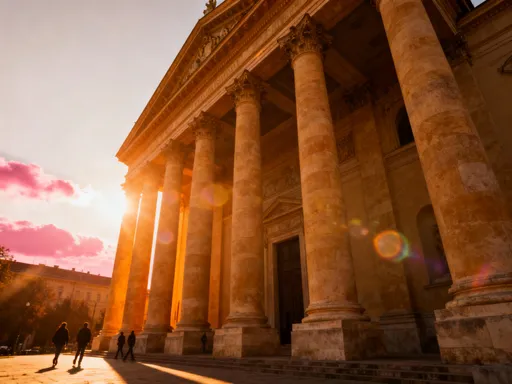
No visit to Debrecen is complete without encountering the Great Reformed Church, a monumental presence in both the cityscape and the national consciousness. Built in the early 19th century, this Neoclassical masterpiece rises with quiet authority in the heart of Kossuth Square. Its massive portico, supported by six towering Corinthian columns, evokes the grandeur of ancient temples, yet its clean lines and restrained ornamentation reflect Enlightenment ideals. The church is not merely a place of worship; it is a symbol of resilience, having survived multiple destructions and rebuilds, most notably after World War II.
From a photographic standpoint, the Great Reformed Church offers a masterclass in scale, symmetry, and light. Its west-facing façade is particularly striking at sunrise, when the low-angle light accentuates the texture of the stone and casts long shadows across the square. The contrast between the warm glow on the columns and the cool tones of the morning sky creates a dramatic yet serene atmosphere. Overcast days, often dismissed by photographers, can be equally rewarding here. Diffused light eliminates harsh highlights and allows for even exposure, revealing subtle details in the carvings and masonry that might be lost in direct sunlight.
One of the challenges—and joys—of photographing this structure is conveying its immense size without losing context. A wide-angle lens captures the full façade, but can distort perspective if not used carefully. Positioning yourself slightly off-center, perhaps from the corner of the square, allows you to include elements of the surrounding urban fabric—benches, trees, passersby—adding depth and human scale. Including people, even as small figures, emphasizes the church’s role as a living part of the community rather than a static monument.
For those interested in interior photography, the church’s vast, columned nave offers a different kind of drama. Natural light filters through high windows, illuminating the wooden pews and the simple yet powerful pulpit. Because photography inside may be restricted at times, it’s wise to observe signage and respect any guidelines. When permitted, a tripod can help capture the interior’s spatial clarity, especially in lower light. The acoustics of the space—known for their resonance—also remind visitors that architecture is not only seen but felt. Capturing the stillness of the interior, perhaps with a lone figure in prayer or reflection, can result in images of profound emotional weight.
Walking the Historic Center: Where Styles Collide and Converge
The heart of Debrecen pulses along Main Street and Kossuth Square, where centuries of architectural evolution are visible in a single stroll. Here, Baroque, Secession (Hungarian Art Nouveau), and post-war reconstruction coexist in a way that feels organic rather than forced. The city’s recovery after the devastation of World War II did not erase its past; instead, it layered new expressions over old foundations. This blend makes the historic center a rich field for photographic exploration, especially for those who appreciate detail and texture.
As you walk, your eye begins to catch the subtle language of buildings. A Baroque-era townhouse might retain its original stonework at ground level, while upper floors show the smoother finishes of later renovations. Iron balconies with intricate scrollwork drape over sidewalks, their railings often painted in deep green or black, contrasting with the pastel hues of the walls. These details are not uniform—they vary from block to block, reflecting the individuality of past residents and craftsmen. For photographers, such elements are gold: they invite close-ups, macro shots, and compositions that focus on pattern and repetition.
Kossuth Square, named after the 19th-century Hungarian statesman Lajos Kossuth, serves as a central stage where architecture and civic life intersect. The square is framed by significant buildings, including the Reformed College and the County Hall, both showcasing Neoclassical and historicist influences. Yet, it is also a place of movement—children playing near the fountain, vendors setting up market stalls, couples pausing for photos. Capturing this interplay between structure and life requires patience. Waiting for a pedestrian to cross the square, or for a shadow to stretch across the pavement, can transform a static scene into a dynamic narrative.
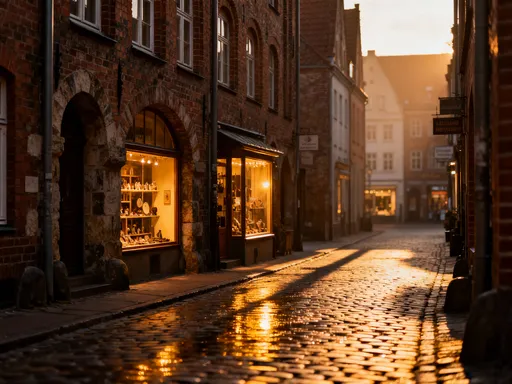
The cobblestone streets themselves contribute to the atmosphere. Worn smooth by time, they reflect light differently than asphalt, adding a tactile quality to images. Rain enhances this effect, turning the stones into a mosaic of reflections. A polarizing filter can help manage glare while deepening the contrast between wet surfaces and building façades. For those using film-style digital filters or shooting in black and white, the square offers high-contrast scenes with strong geometric lines—ideal for creating timeless, evocative images.
Art Nouveau Gems: Hunting for the Forgotten Elegance
While Debrecen is not as widely known for Art Nouveau as cities like Riga or Vienna, it holds hidden treasures of Hungarian Secession architecture—delicate, flowing, and often overlooked. These buildings, constructed in the early 20th century during a period of cultural flourishing, feature organic motifs, curved forms, and vibrant ceramic tiles. Unlike the more flamboyant examples found elsewhere in Europe, Debrecen’s Art Nouveau is restrained, even introspective, blending seamlessly into residential neighborhoods.
One of the joys of seeking out these structures is the sense of discovery. They are not always marked on tourist maps, nor do they always stand at major intersections. Instead, they appear quietly—on a side street near the Great Forest Park, or tucked between more utilitarian buildings in the inner districts. A façade might be adorned with floral reliefs of roses and lilies, or crowned with a wrought-iron balcony shaped like unfurling vines. Windows are often framed with flowing stucco work, and doorways may feature stained glass with geometric or nature-inspired patterns.
For photographers, these details are perfect subjects for macro and detail shots. A 100mm macro lens can isolate a single tile depicting a peacock or a stylized sunburst, revealing craftsmanship that might go unnoticed at a glance. The interplay of light and shadow on curved surfaces adds depth, especially in the late afternoon when the sun skims at a low angle. Early spring, when flowering trees bloom beside these buildings, creates a poetic contrast between natural and architectural beauty.
Residential areas such as the Ady Endre district and the streets around the Reformed Theological University are particularly rich in preserved Secession-style homes. These neighborhoods are peaceful, with tree-lined avenues and a slower pace of life. Walking them feels like stepping into a different era—not frozen, but gently preserved. Because these areas are lived-in, it’s important to photograph with respect. Avoid intrusive angles, knock on doors if seeking interior access, and always be mindful of residents’ privacy. The goal is not to document perfection, but to honor the quiet elegance that persists in everyday places.
The Soviet Legacy: Brutalism and Urban Memory
Any honest exploration of Debrecen’s architecture must include its 20th-century socialist-era buildings—structures often dismissed as dull or oppressive, yet rich with historical and visual significance. Constructed during the mid-1900s, these buildings reflect the ideals and limitations of their time: functionality, uniformity, and collective living. While they lack the ornamentation of earlier styles, they possess a stark beauty defined by geometry, repetition, and raw materiality.
Brutalist apartment blocks, with their exposed concrete surfaces and modular design, dominate certain districts of the city. At first glance, they may seem uninviting, even austere. But through the lens, they reveal a different character. The play of light across textured concrete creates dramatic contrasts. Long shadows stretch across façades in the morning and evening, emphasizing vertical lines and rhythmic window patterns. Rain-soaked surfaces glisten, transforming gray walls into reflective canvases. For photographers drawn to minimalism and abstraction, these buildings offer endless compositional possibilities.
One powerful approach is to juxtapose the old and the new. A single Art Nouveau house standing beside a high-rise panel building tells a story of continuity and change. These contrasts are not meant to judge one era over another, but to acknowledge the full timeline of the city’s development. The socialist-era structures are not relics to be erased; they are part of Debrecen’s lived experience, home to generations of families.
When photographing these buildings, ethical framing is essential. The goal is not to glorify a political system, nor to mock its aesthetics, but to document with empathy and clarity. Including human elements—children playing in a courtyard, laundry hanging from a balcony, a bicycle leaning against a stairwell—adds warmth and context. These small signs of life remind us that architecture, no matter its style, exists to serve people. For women who appreciate stories of resilience and adaptation, these images can be deeply moving—testaments to how communities thrive even within constrained circumstances.
Light, Seasons, and Timing: Mastering the Photographic Moment
In architectural photography, light is not just a tool—it is the subject. In Debrecen, the quality of light changes dramatically with the seasons, offering distinct moods and opportunities. Spring brings soft, diffused light and the delicate bloom of chestnut and lilac trees, which frame buildings with natural elegance. Summer offers long days and strong contrasts, ideal for bold, high-key images, though midday sun can create harsh shadows that require careful exposure management.
Autumn transforms the city with golden foliage, particularly along the avenues near the University of Debrecen. The warm tones of falling leaves contrast beautifully with stone and brick façades, creating rich, layered compositions. Winter, often overlooked, may be the most rewarding season for photography. Snow covers the city in silence, softening edges and highlighting architectural forms. Bare trees reveal the skyline, and frost on windows adds texture and mystery. Early morning frost, combined with the golden glow of streetlights, can produce images of quiet magic.
Golden hour—shortly after sunrise and before sunset—is universally prized, and Debrecen rewards it generously. The low-angle light wraps around buildings, emphasizing depth and dimension. In Kossuth Square, the Great Reformed Church glows in the evening light, its columns casting long, dramatic shadows across the pavement. A tripod is essential during these times, especially when using narrow apertures for greater depth of field. A polarizing filter helps manage reflections on wet surfaces and deepens the blue of the sky without overpowering the scene.
Weather, too, plays a creative role. Mist rising from the Hortobágy plains on a cool morning can drift into the city, veiling buildings in soft layers. Rain adds reflections to cobblestones and awnings, doubling the visual interest. Shooting in less-than-ideal conditions often leads to the most distinctive images. The key is preparation: a weather-resistant camera bag, lens cloths, and patience. For women travelers, who often plan trips with care and intention, these details matter. Knowing when and how to shoot allows for a deeper, more fulfilling experience—one that goes beyond snapping photos to truly seeing the city.
Beyond the Postcard: Capturing the Soul of the City
Technical precision has its place, but the most memorable photographs go beyond sharp focus and perfect exposure. They tell stories. In Debrecen, the soul of the city emerges not in flawless postcard views, but in fleeting moments: a woman arranging flowers in a window box beneath a Secession façade, a man reading a newspaper on a park bench framed by Neoclassical columns, a child’s shadow stretching across a cobblestone street at dusk. These are the images that linger.
A documentary-style approach encourages photographers to slow down, observe, and wait. Rather than rushing from landmark to landmark, consider spending an hour in one location. Watch how light moves across a wall. Notice how people interact with their environment. A fountain is not just a sculpture—it becomes alive when a child reaches toward the water, or pigeons scatter at the sound of footsteps. These interactions ground architecture in human experience, making it relatable and real.
Authenticity, not perfection, should be the goal. A slightly blurred motion shot of a tram passing the Great Church in the rain can feel more honest than a technically flawless but lifeless wide-angle capture. Imperfections—overexposed highlights, a passerby caught mid-step—can add energy and truth. For women who value meaningful connections and emotional depth in their travels, this approach resonates deeply. Photography becomes not just a record, but a form of mindfulness—a way to be fully present in a place.
Patient observation also leads to unexpected discoveries. You might notice a hidden courtyard with a mosaic-tiled doorway, or a shopkeeper who waves every morning from the same window. These small moments, when captured with care, become the heart of a photographic journey. They remind us that cities are not just collections of buildings, but living, breathing entities shaped by time, memory, and daily life.
Conclusion: Framing the Future Through the Past
Debrecen does not shout its beauty. It whispers. Its architectural richness lies not in uniform perfection, but in its layered history, its quiet resilience, and its ability to harmonize the old with the new. For photographers, especially those who seek depth over spectacle, the city offers a rare opportunity: to see, to understand, and to document with intention. Each building, from the grand Reformed Church to the modest panel apartment, is a chapter in a continuing story.
The act of photographing Debrecen becomes more than a creative pursuit—it is a form of engagement. It asks us to look closely, to respect context, and to honor the lives that inhabit these spaces. In a world where travel can feel rushed and superficial, Debrecen invites slowness, reflection, and connection. It reminds us that beauty often resides in the overlooked, the weathered, the lived-in.
As you pack your camera and prepare to leave, consider what you’ve captured not just on memory cards, but in your heart. The images you bring home are more than souvenirs; they are testaments to a city that has endured, adapted, and continued. By framing its past, you also help shape its future—ensuring that its stories, told through stone, light, and shadow, are seen and remembered. For the thoughtful traveler, there is no greater gift.