You Won’t Believe What This Dutch City Hides in Plain Sight
Groningen isn’t your typical Dutch postcard—no windmills or tulip fields here. Instead, it’s a city where bold architecture meets everyday life in the most unexpected ways. I wandered its streets not knowing what to expect, and left completely stunned. From futuristic libraries to buildings that look like they’re from another planet, Groningen redefines urban design. This is architecture that doesn’t just stand there—it speaks, surprises, and sometimes even laughs at convention. More than a visual delight, the city offers a profound lesson in how thoughtful design can shape community, identity, and daily joy. For travelers seeking authenticity over spectacle, Groningen is a quiet revelation waiting to be discovered.
First Impressions: A City That Doesn’t Try Too Hard
Groningen often slips beneath the radar of international travelers, overshadowed by Amsterdam’s canals or Rotterdam’s skyline. Yet, for those who venture north, the city unfolds as a refreshingly unpretentious urban experience. The moment you step into its center, a sense of calm settles in. Bicycles glide past in steady streams, students chat on café terraces, and the pace of life feels measured, not hurried. There’s no forced charm here—no staged facades or tourist traps. Instead, Groningen reveals itself gradually, like a well-kept secret shared only with those who take the time to look.
What makes the city’s atmosphere so distinct is its architectural harmony. Unlike places where modern development clashes with historic fabric, Groningen blends the old and new with remarkable ease. Centuries-old churches, such as the Grote of Sint-Jacobskerk, stand proudly beside glass-fronted cultural centers and angular residential towers. The juxtaposition doesn’t feel jarring—it feels intentional, like a conversation between generations. This balance reflects a deeper philosophy: progress doesn’t require erasure. The city respects its past while embracing innovation, creating a rhythm that feels both grounded and forward-looking.
The streets themselves tell this story. Cobblestone lanes lead to wide, open plazas where children play and markets unfold weekly. Architecture here doesn’t scream for attention; it invites engagement. A passerby might not immediately notice the subtle curvature of a rooftop or the clever use of recycled materials in a façade, but over time, these details accumulate into a powerful impression. Groningen teaches that great urban design isn’t about grand gestures—it’s about creating spaces where people naturally want to linger, connect, and belong.
The Iconic Cube Houses: Not in Rotterdam—Right Here
When most people think of the Netherlands’ cube houses, they picture Rotterdam’s famous Kubuswoningen. Few realize that Groningen boasts its own version—equally daring, yet more understated in presentation. Designed by the same visionary architect, Piet Blom, these tilted, three-dimensional homes challenge everything we assume about residential architecture. Perched atop pillars and angled at 45 degrees, they resemble wooden diamonds suspended in air. From a distance, they look like a child’s toy scattered across the urban landscape, playful and slightly surreal.
But these are not mere art installations. Each cube functions as a private residence or office space, home to real people living real lives. The design forces a rethinking of interior space—stairs cut through tight corners, windows face unexpected directions, and natural light filters in from above. Inside, the layout demands creativity, turning limitations into opportunities for clever storage, multi-use furniture, and intimate nooks. For visitors, the real magic happens outside. Walking beneath the structures, you feel dwarfed by their geometric boldness. Sunlight dances across the yellow-painted wood, casting shifting patterns on the pavement below. The shadows move with the hours, transforming the space into a living sundial of angles and light.
What sets Groningen’s cube houses apart is their integration into daily life. Unlike tourist-heavy sites where architecture feels performative, here the cubes coexist with grocery stores, bike lanes, and apartment blocks. Children ride past on scooters without a second glance. Neighbors greet each other under the tilted eaves. The buildings don’t demand admiration—they simply exist, part of the neighborhood’s quiet fabric. This seamless blend of innovation and normalcy is a hallmark of Groningen’s design ethos: bold ideas are welcome, but only if they serve the community.
The Martini Tower: A Lean That Beats Pisa’s
Rising above the Grote Markt like a weathered sentinel, the Martinitoren is the soul of Groningen’s skyline. At first glance, it appears a classic medieval tower—Gothic in style, built of red brick, crowned with a slender spire. But a closer look reveals something extraordinary: a subtle, unmistakable tilt. While less dramatic than the Leaning Tower of Pisa, the Martinitoren’s lean is older—dating back to the 15th century—and arguably more dignified. It doesn’t scream for attention; it stands with quiet resilience, a testament to centuries of survival.
Climbing the tower’s 260 stone steps is not for the faint of heart, but the reward is unparalleled. With each turn of the spiral staircase, the city unfolds below—red rooftops, tree-lined canals, the occasional flash of a cyclist’s jacket. At the top, the view stretches across the entire province of Groningen, on clear days reaching nearly to the Wadden Sea. The bells, housed in the upper chamber, ring every quarter hour, their deep chimes vibrating through the ancient walls. Standing so close to them, you don’t just hear the sound—you feel it in your chest, a physical connection to the city’s heartbeat.
What makes the Martinitoren so powerful is its history. Completed around 1482, it has weathered fires, wars, and storms. It survived the collapse of its predecessor, which fell during a storm in 1464, killing dozens. Over the centuries, it has served as a watchtower, a symbol of civic pride, and a spiritual anchor for the community. Today, it remains a place of reflection and continuity. Locals visit not just for the view, but to honor the past. The tilt, once a structural flaw, has become a point of pride—a reminder that perfection is overrated, and endurance matters more.
The New City Hall: When Politics Meets Playfulness
If the Martinitoren represents Groningen’s historical soul, the new city hall embodies its modern spirit. Opened in 2018, the building is a striking departure from traditional government architecture. Gone are the heavy columns and imposing facades. In their place is a vibrant, irregular glass exterior in shades of blue, green, and amber, shifting color with the daylight. The structure curves like a ribbon, wrapping around an open public plaza where people gather, relax, and protest with equal ease. This is governance made visible—transparent, approachable, and surprisingly joyful.
The design, by architect Richard Meier & Partners in collaboration with local firms, reflects a philosophy of democratic openness. Glass walls allow passersby to see into meeting rooms and offices, dissolving the usual barriers between citizens and officials. The rooftop garden, accessible to the public, offers panoramic views and a peaceful retreat from urban noise. On weekends, families picnic there; on weekdays, office workers sip coffee while watching clouds drift over the rooftops. The building hosts concerts, art exhibits, and public debates, turning civic space into a living cultural venue.
Perhaps most telling is how locals interact with the space. Unlike city halls in other countries that feel formal or intimidating, Groningen’s invites casual use. Teenagers skateboard near the entrance, tourists take photos against the colorful façade, and activists set up banners during demonstrations. The architecture doesn’t suppress expression—it encourages it. In this way, the building does more than house government functions; it embodies them. Democracy, the design suggests, thrives not in silence and solemnity, but in light, movement, and public participation.
The Forum: Where Culture, Knowledge, and Design Collide
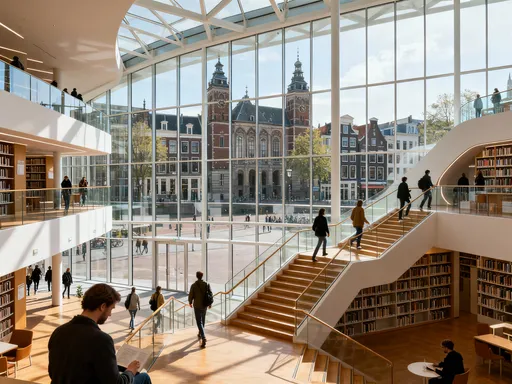
Rising like a crystalline mountain in the heart of the city, the Groninger Forum is one of the most ambitious public buildings in the Netherlands. Opened in 2018, it combines a central library, exhibition spaces, a movie theater, and a food court under one sweeping roof. Its design—angular, glass-heavy, and dramatically sculpted—creates a bold contrast with the surrounding historic structures. Yet, rather than feeling out of place, the Forum acts as a bridge between past and future, tradition and innovation.
Step inside, and the experience becomes immersive. Natural light floods through skylights and glass walls, illuminating open staircases that spiral like DNA strands. The interior feels expansive yet intimate, with reading nooks tucked into alcoves and art installations integrated into the architecture itself. A massive kinetic sculpture by artist Peter Struycken shifts patterns overhead, responding to real-time weather data. Visitors don’t just use the space—they engage with it, curious and slightly awed.
More than an architectural marvel, the Forum is a social success. It draws students, retirees, families, and tourists alike. On any given day, you might see a teenager studying for exams, an elderly couple browsing photography exhibits, or a group of friends meeting for coffee before a film. The library, one of the largest in the country, offers books in multiple languages, digital resources, and quiet zones for deep focus. Meanwhile, the exhibition halls rotate displays on regional history, contemporary art, and scientific innovation, ensuring there’s always something new to discover.
The Forum’s true achievement lies in its inclusivity. It doesn’t cater only to intellectuals or art lovers—it welcomes everyone. Children laugh in the play areas, job seekers attend free workshops, and newcomers learn Dutch in community classes. In a world where public spaces are increasingly privatized or exclusive, the Forum stands as a model of what shared urban infrastructure can be: beautiful, functional, and deeply democratic.
Hidden Gems: The Architecture You’ll Miss Without Looking
Beyond the landmarks, Groningen is filled with architectural surprises that reveal themselves only to the attentive traveler. These are not the kind of sites listed on every guidebook cover, but they may leave the deepest impression. Take the EVB building, for instance—a sleek, futuristic office complex with a façade of shifting aluminum panels that reflect the sky like liquid metal. Or the Wave, known locally as “De Golf,” a residential complex whose undulating white roofs mimic ocean currents, creating a dreamlike streetscape.
Then there are the adaptive reuse projects—old factories and warehouses transformed into creative hubs, co-working spaces, and cultural centers. One former textile mill now houses artist studios, a design school, and a popular weekend market. Inside, exposed brick meets polished concrete, and original machinery has been repurposed as art. Courtyards once used for loading trucks are now filled with benches, plants, and outdoor galleries. These spaces prove that sustainability and beauty can go hand in hand.
Wander through the quieter neighborhoods, and you’ll find homes with green roofs, solar panels disguised as tiles, and gardens that climb walls like living tapestries. Even modest apartment blocks incorporate clever design—shared rooftop terraces, sound-absorbing materials, and bike storage integrated into the façade. These details don’t seek praise; they simply improve life. They reflect a city-wide commitment to thoughtful, human-centered design—one that values comfort, efficiency, and aesthetics equally.
The lesson here is simple: the most meaningful architecture isn’t always the loudest. Some of Groningen’s best designs are hidden in plain sight, waiting for those who walk slowly, look closely, and appreciate the quiet details. These spaces remind us that urban beauty isn’t just about monuments—it’s also about the everyday environments where people live, work, and grow.
Why Groningen’s Architecture Works: Function Meets Freedom
What makes Groningen’s built environment so successful isn’t any single building, but the philosophy behind it. The city demonstrates that bold architecture doesn’t have to sacrifice comfort or practicality. Every major project—from the Forum to the new city hall—was designed with people in mind. Pedestrians and cyclists come first. Wide sidewalks, dedicated bike lanes, and car-restricted zones make movement safe and pleasant. Green spaces are woven throughout, offering pockets of calm amid the urban energy.
This people-first approach is no accident. Groningen is home to a major university and a strong tradition of design education, fostering a culture of innovation grounded in research and social responsibility. Architects and planners here don’t work in isolation—they collaborate with residents, city officials, and environmental experts. Public feedback shapes projects from the start, ensuring that new developments meet real needs, not just aesthetic ideals.
Equally important is the city’s tolerance for experimentation. Unlike places where development is driven by profit or prestige, Groningen encourages architectural risk-taking—as long as it serves the community. The cube houses, once considered radical, are now beloved. The Forum, initially met with skepticism, has become a daily destination for thousands. This openness to change, balanced with respect for tradition, creates a dynamic yet stable urban identity.
Ultimately, Groningen proves that cities can be both functional and inspiring. Its architecture doesn’t alienate; it welcomes. It doesn’t overwhelm; it enhances. In a world where so many urban centers look the same—dominated by glass towers and chain stores—Groningen stands out by being unapologetically itself. It shows that with vision, collaboration, and courage, cities can be places of beauty, belonging, and constant discovery.
How to Experience It: A Thoughtful Itinerary for Curious Travelers
To truly appreciate Groningen, you must slow down. This is not a city to rush through. Begin at the Grote Markt, the historic heart where the Martinitoren stands guard. Spend an hour here—sip coffee at a café with outdoor seating, watch street performers, and absorb the rhythm of local life. From there, walk north toward the cube houses. Take your time exploring the area, circling beneath the tilted structures, noticing how light and shadow shift with the time of day.
Next, make your way to the Groninger Forum. Allow at least two hours to wander through the library, visit an exhibit, and perhaps catch a short film. Don’t skip the upper floors—climb the open staircase and enjoy the play of light and space. Afterward, head to the new city hall. Visit in the late afternoon, when the sun hits the glass façade and sets the colors ablaze. If possible, go up to the rooftop garden for sunset views over the city.
End your day with a quiet walk along one of Groningen’s many canals. Rent a bike if you can—the city is made for cycling, and the experience of gliding past historic homes and modern buildings side by side is unforgettable. Stop at a local eatery for a warm meal—something simple, like Dutch stew or fresh bread with cheese. Let the day settle in.
The best discoveries in Groningen happen when you’re not chasing checklists. A hidden courtyard, a mural on a side street, a conversation with a local—these unplanned moments often become the most memorable. Travel here not to collect sights, but to reconnect with the joy of exploration. Let the city surprise you, challenge your assumptions, and remind you that great design is not just seen—it’s felt.
Conclusion
Groningen doesn’t shout, but it definitely speaks—if you’re willing to listen. Its architecture isn’t about spectacle for spectacle’s sake; it’s about reimagining how cities can feel alive, inclusive, and surprising. This is a place where every building has a story, and every corner invites curiosity. In a world of cookie-cutter urban design, Groningen stands out by being unafraid to be different. Visit not to check a box, but to rethink what a city can be. Let its quiet confidence, its blend of old and new, its commitment to people over profit, inspire your own vision of community and beauty. Groningen doesn’t just show you architecture—it shows you a way of living.