You Won’t Believe What I Saw Driving Through Nazca’s Otherworldly Landscapes
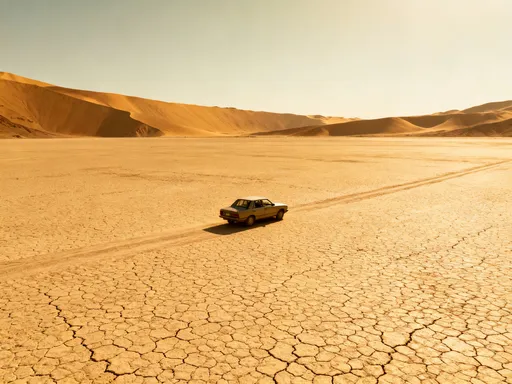
Driving through Nazca, Peru, felt like entering another planet. The vast desert stretches endlessly, dotted with ancient geoglyphs and surreal rock formations shaped by wind and time. I didn’t expect such raw, untouched beauty. From the moment I hit the open road, every turn revealed a new wonder—cracked earth canyons, lonely cacti silhouettes at sunset, and skies so clear they made the stars feel within reach. This journey wasn’t just about seeing Nazca—it was about feeling it. The silence, the scale, the slow unfolding of landscape beneath shifting light transformed a simple drive into something deeply personal. In that emptiness, I found not isolation, but connection—to earth, to sky, and to the quiet resilience of life in one of the world’s most extreme environments.
Why Nazca by Car Changes Everything
Traveling through the Nazca region by car offers a fundamentally different experience than the more common aerial tours or group bus excursions. While flying above the Nazca Lines provides a clear view of their intricate shapes, it lacks the tactile, immersive quality of moving slowly across the land. Driving allows travelers to engage with the desert on a human scale—feeling the rise and fall of the terrain, hearing the crunch of gravel beneath tires, and smelling the dry, mineral-rich air that sweeps in from the coast. This physical presence fosters a deeper emotional connection, turning observation into participation.
The freedom of self-guided travel cannot be overstated. When you control the pace, you can stop where others rush by—perhaps at a crumbling lava field where wind-carved stones resemble ancient statues, or beside a lone prickly pear cactus clinging to life in cracked soil. These unplanned pauses often become the most memorable moments of a journey. There is something profoundly grounding about standing in the desert with no one else in sight, watching dust devils spiral across the plain like silent dancers. That solitude is not emptiness; it is presence.
Moreover, driving enables access to areas beyond the typical tourist circuit. While most visitors see Nazca through a small airplane window or from a roadside viewpoint, those behind the wheel can explore transitional zones—places where the coastal fog belt meets the arid plateau, or where ancient riverbeds cut through otherwise flat expanses. These ecological edges are rich with subtle life: lichens on sun-baked rocks, tracks of nocturnal rodents in the sand, and the occasional Andean fox darting between boulders. Such details are invisible from above but deeply felt when experienced at ground level.
The rhythm of driving also shapes perception. As hours pass on open roads, the mind settles into a meditative state, more receptive to nuance. Shadows lengthen in slow motion. Colors shift from pale gold to deep ochre. The horizon seems to breathe, expanding and contracting with the heat. This gradual sensory immersion allows travelers to absorb not just what the landscape looks like, but how it feels—its temperature, its silence, its ancient stillness. In this way, a car becomes more than transportation; it becomes a vessel for understanding.
Preparing for the Road: Vehicle, Routes, and Realities
Before embarking on a self-drive journey through southern Peru, practical preparation is essential. The region’s remote location and extreme climate demand careful planning, particularly regarding vehicle selection and route knowledge. Most travelers begin their drive from Nazca town, accessible via the Pan-American Highway from either Lima to the north or Arequipa to the south. While the highway itself is paved and well-maintained, many of the side roads leading to natural attractions are unpaved, rocky, or sandy—conditions that require a suitable vehicle.
A four-wheel-drive SUV is highly recommended, especially for those intending to explore off-main routes. These vehicles offer better clearance, traction, and durability on rough terrain. Even if your primary route remains on paved roads, having 4WD capability provides peace of mind when unexpected detours arise—such as washed-out sections after rare rainfalls or unmarked paths to secluded viewpoints. When renting, choose a reputable agency that provides recent models with reliable air conditioning, as daytime temperatures regularly exceed 95°F (35°C), and mechanical breakdowns in such heat can be dangerous.
Fuel availability is another critical consideration. Service stations are sparse between major towns, so it’s wise to fill the tank whenever possible—particularly before leaving Nazca or Puquio. Some remote routes may have no refueling options for over 100 miles. Carrying extra water and non-perishable snacks is equally important, as roadside amenities are limited. Mobile phone coverage is inconsistent, so downloading offline maps and carrying a physical atlas as backup is a prudent measure.
Driving conditions in Peru differ from those in many Western countries. Local drivers often travel at high speeds on straight stretches, and livestock occasionally wander onto rural roads. Dust storms, known locally as *paracas*, can reduce visibility to near zero, especially near the coast. These are not reasons to avoid the journey, but rather reminders to stay alert and adjust driving habits accordingly. Traveling during daylight hours, maintaining a safe distance from other vehicles, and checking weather forecasts daily will help ensure a safe and enjoyable experience.
The Desert Unfolded: Key Natural Sights Along the Way
Beyond the world-famous Nazca Lines, the surrounding desert holds a wealth of natural wonders that reward those who take the time to explore them. One of the most striking features is the Cerros de Huaca, a series of wind-eroded sandstone formations that rise abruptly from the flat plain. Their layered surfaces, sculpted by centuries of wind and sand, resemble giant waves frozen in stone. At sunrise, the soft light accentuates their curves, casting long shadows that make the rock appear almost fluid. These formations are best viewed from a short walking trail accessible by car, offering a rare chance to walk among geological artistry shaped entirely by nature.
Another compelling destination is the Maria Reiche Peaks, named after the German archaeologist who dedicated her life to studying the Nazca Lines. These rocky outcrops stand like sentinels on the desert’s edge, their dark basalt surfaces contrasting sharply with the pale sand below. From certain angles, the peaks align with specific geoglyphs, suggesting they may have served as astronomical markers for the ancient Nazca people. Whether or not that theory holds, the site’s atmosphere is undeniably powerful. Standing there, with the wind humming through narrow fissures in the rock, one can almost sense the same awe that inspired early inhabitants to create their monumental designs.
Equally impressive is the Cañón de Cantalloc, a deep ravine carved by seasonal water flow over millennia. Unlike the surrounding desert, this canyon supports a fragile ecosystem where hardy plants like mesquite and tamarugo trees find moisture in subsurface layers. The walls display vivid mineral streaks—rust red, mustard yellow, and charcoal gray—revealing the region’s complex geological history. A network of ancient *puquios*, or spiral-shaped aqueducts, runs through the area, evidence of sophisticated engineering by pre-Incan civilizations. These structures, still partially functional today, speak to human ingenuity in adapting to one of Earth’s driest climates.
Each of these sites contributes to a broader understanding of the Nazca region as more than just a canvas for mysterious lines. It is a living landscape shaped by natural forces and human resilience. The desert is not barren; it is balanced. Life exists in minimal but meaningful forms—microbes in salt flats, birds nesting in cliff faces, insects adapted to extreme temperatures. By visiting these natural landmarks, travelers gain a fuller appreciation of the environment that gave rise to one of history’s most enigmatic cultures.
Chasing Light: Best Times to Drive and Photograph the Landscape
The visual character of the Nazca desert changes dramatically with the time of day, making timing a crucial element of any self-drive journey. The midday sun, while bright, often flattens the landscape, washing out textures and creating harsh contrasts. It is during the golden hours—just after sunrise and before sunset—that the desert reveals its true beauty. At these times, low-angle light skims across the surface, highlighting every ripple in the sand, every crack in the rock, and every shadow cast by distant ridgelines.
For photographers and visually oriented travelers, planning driving schedules around these windows can transform the experience. Starting early allows you to reach key viewpoints by dawn, when the air is cool and still. As the first rays touch the horizon, the entire desert seems to awaken. The sand shifts from gray to gold, and distant mountains emerge like silhouettes from the mist. Fog, known as *garúa*, often rolls in from the Pacific Ocean during morning hours, creating ethereal scenes where land and sky blur into one another. Capturing this moment requires patience and preparation—setting up the car in the right position the evening before, checking wind direction, and having equipment ready.
Evening offers its own rewards. As the sun dips below the horizon, the sky erupts in layers of color—soft pinks, deep purples, and molten oranges—that reflect off the pale ground, bathing the landscape in a warm, diffused glow. This is the ideal time to stop and simply observe. Sitting quietly by the roadside, watching the light fade and stars begin to appear, creates a sense of timelessness. The transition from day to night in the desert is not abrupt; it unfolds slowly, like a breath being released.
For those interested in astrophotography, the Nazca region offers exceptional conditions. With minimal light pollution and typically clear skies, the Milky Way arcs overhead with stunning clarity. A car serves as both shelter and stable platform, allowing travelers to set up tripods and capture long exposures without disturbance. Even without advanced equipment, the naked-eye view of the night sky here is unforgettable—a vast, glittering dome that makes one feel both small and profoundly connected to the universe.
Off-the-Beaten-Path Detours That Pay Off
Some of the most rewarding moments on a self-drive journey come from venturing beyond marked routes. While major attractions like the Nazca Lines viewing tower and the Cantalloc aqueducts are well worth visiting, they often draw crowds and structured itineraries. True discovery happens when you turn onto a dirt track with no signposts, guided only by curiosity and a reliable map. These detours, though modest in distance, can lead to extraordinary experiences—places where the land feels untouched, where silence is absolute, and where the weight of history seems close enough to touch.
One such detour lies along an unmarked road southeast of Nazca, where low elevation offers clear views of several lesser-known geoglyphs etched into the desert floor. Unlike the famous monkey or hummingbird, these figures are simpler—straight lines, trapezoids, and zigzags—but no less intriguing. Their purpose remains unclear, but their precision suggests careful planning and astronomical alignment. Viewing them from ground level, rather than from the air, allows for a different kind of contemplation. You can walk alongside them, trace their direction with your eyes, and imagine the effort required to create such vast designs without modern tools.
Another hidden gem is an abandoned desert research station near the foothills of the Andes. Built decades ago for archaeological surveys, the structure now stands empty, its concrete walls weathered by wind and sun. Graffiti from past visitors covers some surfaces, but the site retains a quiet dignity. From this vantage point, the desert unfolds in every direction, interrupted only by distant mountain ranges. It’s the kind of place where time feels suspended—where a moment of stillness can stretch into ten minutes or ten hours without notice.
Exploring such areas requires responsibility. Much of the Nazca region is protected under Peruvian law, and unauthorized access to certain zones can result in fines or restrictions. Travelers should respect barriers, avoid driving over archaeological sites, and leave no trace of their presence. The goal is not conquest, but reverence. When approached with care, these off-the-beaten-path locations offer not just solitude, but a deeper understanding of the land’s fragility and endurance.
Connecting with the Land: How Self-Driving Deepens Understanding
Moving through a landscape at walking or driving speed fosters a kind of intimacy that faster modes of travel cannot replicate. When you fly over the Nazca Lines, you see their form but miss their context. From the ground, however, you begin to understand the relationship between the lines and the terrain—how they follow natural slopes, avoid obstacles, and align with distant peaks. You notice the fine layer of reddish-brown iron oxide that coats the surface stones, and how removing it reveals lighter soil beneath, creating the contrast that makes the geoglyphs visible. These details are not just interesting facts; they are clues to how the ancient Nazca people interacted with their environment.
Driving also teaches awareness of distance and scale. On a map, two points may appear close together, but in the desert, covering that space can take hours. This physical reality underscores the challenges faced by ancient civilizations—how they transported materials, communicated across vast areas, and sustained communities in such an inhospitable climate. The journey becomes a lesson in resilience, not just for the people of the past, but for the traveler in the present.
Moreover, proximity allows for repeated observation. As you pass the same ridge at different times of day, you see how light transforms its appearance. A feature that looked dull at noon may glow with warmth at sunset. This repetition builds familiarity, turning anonymous terrain into known territory. It is a subtle shift, but a powerful one—like learning the face of a stranger until it becomes a friend.
In this way, self-driving becomes a form of slow travel—one that prioritizes depth over breadth, reflection over checklist tourism. It invites travelers to engage not just with sights, but with systems: ecological, geological, cultural. The desert is not a backdrop; it is a participant. And those who move through it with attention and respect often find themselves changed by the experience.
Final Thoughts: Why This Road Stays With You
The journey through Nazca’s desert landscapes lingers in memory not because of any single sight, but because of the cumulative effect of silence, space, and time. Driving through this ancient, windswept region strips away distractions, leaving only the essentials: the road ahead, the sky above, and the quiet rhythm of your own breath. In that simplicity, something profound emerges—a sense of clarity, of perspective, of connection to forces much larger than oneself.
This kind of travel does not entertain; it transforms. It asks more than it gives, demanding patience, adaptability, and openness. But in return, it offers moments of pure presence—standing on a ridge as fog lifts from a canyon, watching a hawk circle against a cloudless blue, or sitting in the dark with the stars blazing overhead. These are not experiences to be captured fully in photographs or described perfectly in words. They are felt.
For women in their thirties to fifties—many of whom balance family, work, and personal responsibilities—such journeys can be especially meaningful. They represent not escape, but reconnection. They remind us that curiosity does not expire with age, that wonder is still possible, and that the world holds spaces vast enough to hold our dreams and quiet enough to hear our inner voice.
If you choose to drive through Nazca, go with preparation and respect. Honor the land, follow local guidelines, and travel safely. But also go with an open heart. Let the desert speak. Let the long stretches of road become meditations. Let the silence fill you. Because in the end, the true destination is not a place on a map, but a state of mind—one of awe, humility, and renewed appreciation for the enduring beauty of our planet.